
The World
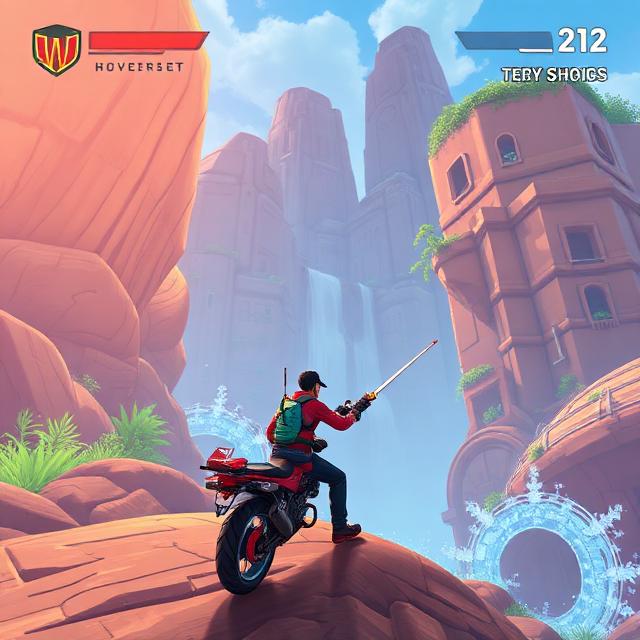
Halcyon Ascent is a game about a single direction: up. Skyward Forge has built a tower of floating ruins a full mile high — a stack of broken temples, drifting gardens and shattered aqueducts suspended in bright open sky — and the entire campaign is the act of climbing it, hold by hold, from the cloud-deck at the bottom to whatever waits at the summit. There is no fast travel, because fast travel would be a betrayal. Every metre of altitude in this game is altitude you earned with your hands.
The verticality reframes everything. Looking down is genuinely vertiginous, and the game uses that height as its primary storytelling tool: the ruins below you, now tiny, are places you climbed an hour ago, and the sense of accumulated progress is extraordinary. The world tells its story in strata, like rock — each layer of the tower belonged to a different vanished people, and you read their history by climbing through it, the architecture growing stranger and older the higher you go.
The Systems
Movement is the entire game, and Skyward Forge has tuned it to a fine edge. Climbing is momentum-based rather than sticky: you do not glue to walls and shuffle, you swing, vault and carry speed between holds, and a missed grab sends you plummeting unless you can convert the fall into a recovery. The system rewards reading a wall like a route-setter — seeing the line three moves ahead, committing to a leap before you can be sure of the landing, trusting the momentum to carry you.
Few games make the simple act of reaching the next ledge feel like a victory. This one makes it feel like flight.
Stamina is the one resource, and it is handled elegantly: not a punishing meter but a rhythm, draining as you climb and recovering whenever you find a stable stance, so the game becomes a dance of exertion and rest up the face of the tower. Late-game movement tools — a grapple, a glide, a wall-run — expand the vocabulary without ever trivialising the climb, and the best sections weave all of them into single unbroken runs of motion that feel, when you nail them, like the best thing a game can make your hands do.
Art & Sound
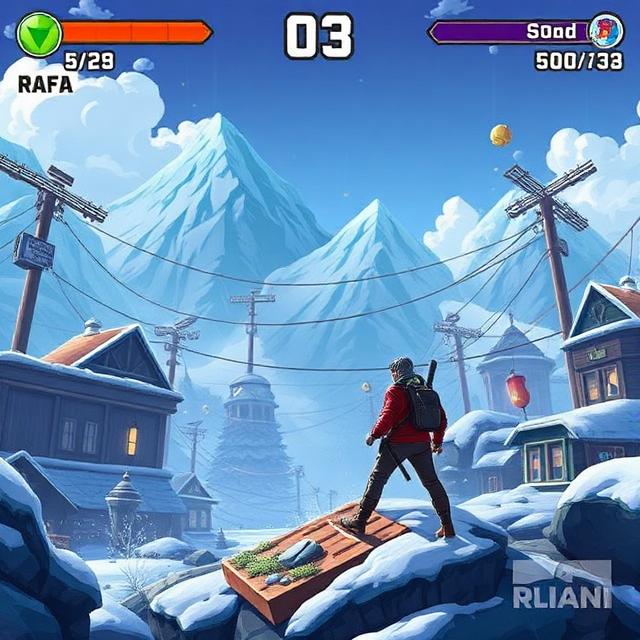
This is a luminous game. Where so much of the medium trades in gloom, Halcyon Ascent is flooded with bright open light, and the higher you climb the more radiant it becomes, until the summit approaches in a wash of pale gold that the whole ascent has been building toward. The ruins are gorgeously imagined, each stratum architecturally distinct, and the sense of scale — tiny climber against immense drifting stone — never stops being breathtaking.
The score swells with altitude, a soaring orchestral build that crests at each rest-point and pulls back to wind and breath during the hardest climbs. Audio cues do real mechanical work too: the scrape of a slipping hand, the creak of a hold about to give, the rush of air on a long fall. It is a game that sounds like height.
Performance
A game built on momentum cannot afford to stutter, and Halcyon Ascent delivers, holding a consistent frame rate through its most demanding vertical vistas on our reference hardware. The streaming of the tower — loading a mile of detailed ruins as you climb — is handled almost invisibly, with only the rare faint pop-in of distant geometry far below. Checkpointing is fair and frequent, which matters enormously in a game where a single missed grab can cost real altitude. We logged no crashes across the full ascent.